
July 25, 2025
LA GRANDE, ORE. – Sometimes, a walk in the woods requires tall boots, or even waders - and sometimes forest restoration goes beyond the trees.
The Sheep Creek Stewardship Project in the upper Grande Ronde River watershed is multifaceted - combining improved fish and wildlife habitat, floodplain reconnection and a landscape more resilient to wildfire on land managed by the Wallowa-Whitman National Forest and the Bureau of Land Management.
Former La Grande District Ranger Bill Gamble said, “We asked ourselves if we wanted to be more aggressive at reducing fuels than just hand piling. We decided we wanted riparian health included in the purpose and need in areas of the project where it made sense.”
Thinning trees along streams and rivers is not typical; fish-bearing streams need to be cool and tree-shade helps keep temperatures low. However, encroaching conifers like lodgepole pine can out-compete deciduous, riparian vegetation like alder and willow.
Gamble said the project area was deemed “functioning at risk” - meaning the ecosystem needed help to support its fish, wildlife and plant communities. The project sought to keep water temperatures cool, add riparian vegetation, improve fish passage, decrease road sediment and manage wildlife exclosures protecting growing vegetation from deer and elk.
“Our Legacy Funds proposal was successful and paid for work on fish passage and resurfacing the road,” Gamble said. It also addressed upland habitat.”
Besides Chinook salmon, steelhead and rainbow trout, Gamble said fish and wildlife species like Pacific lamprey, dace and sculpin, Columbia spotted frog, great grey owls, native freshwater mussels and crawfish all live within the project area.
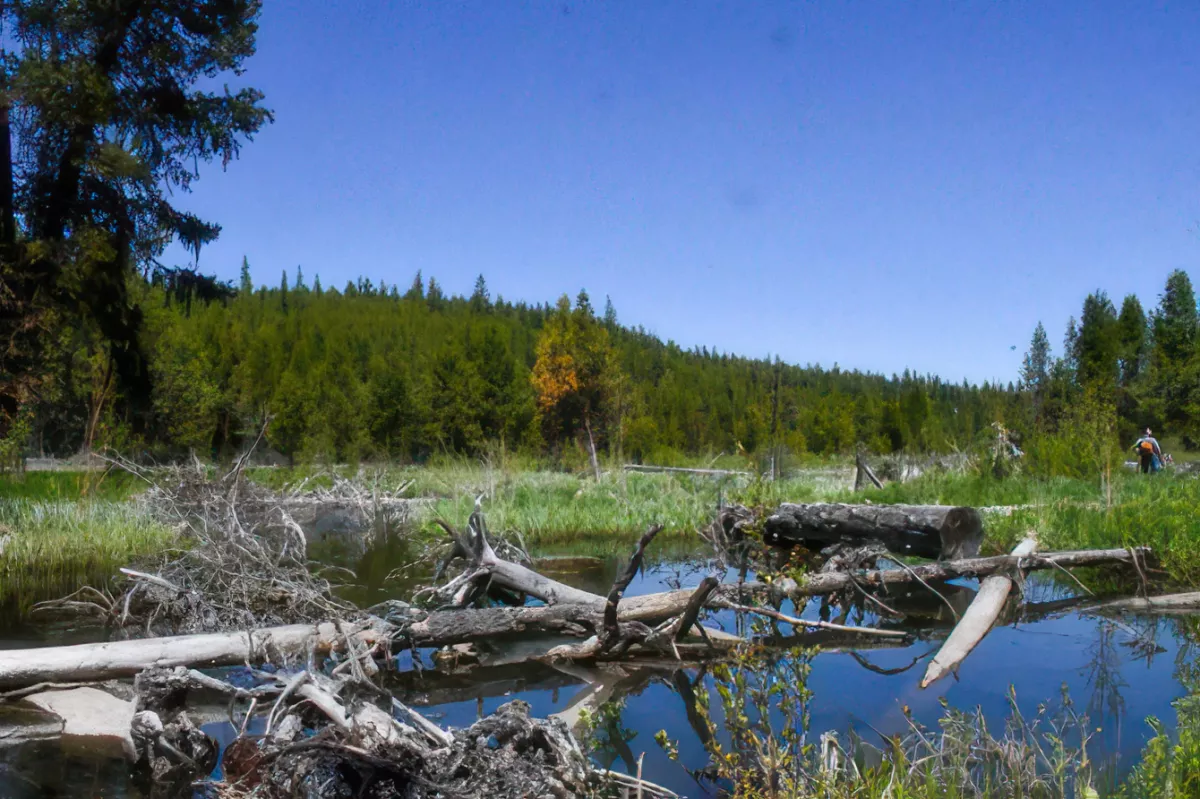
Over the course of many years, Sheep Creek became a sub-watershed project - more comprehensive than typical projects focused more on either the upland or aquatic environments. Levi Old, the Northeast Oregon Restoration Director for Trout Unlimited, said that over the ten years 18,000 plants were planted, five culverts replaced, large wood and beaver dam analog structures installed in the floodplain, and straight channels that allowed swift water were re-designed, leaving more resting areas for fish.
“Every year we are doing something - planting, fencing or thinning conifers,” Old said. “Within the systems there is a lot of overlap - they are intertwined.”
That overlap complicated the project design and slowed down the consultation process with the regulatory agencies - National Marine Fisheries and U.S. Fish and Wildlife Service - but the members of the project team decided it was worth the wait.
Sarah Brandy, Fisheries Program Manager for the Wallowa-Whitman National Forest, has been involved in the Sheep Creek Project since 2016. She said, “We took a hard look at the landscape and what the needs were. There are many acres in the Blue Mountains like this - we wanted to go beyond the riparian area and do a deeper analysis. We were committed to pushing the envelope and, with our ranger’s support; we turned a corner on managing the riparian.”
Combining a vegetation-focused project with benefits for fish and wildlife is not unique, but the integration of the two on Sheep Creek provided opportunities to reduce fuels that Lucas Glick, La Grande District silviculturist, said presented a “significant risk for high intensity fire.” Within the 35,000-acre project area 12,000 acres were thinned for forest health and to provide strategic fuel breaks, Glick said. A commercial timber sale of 1,700 acres will be sold later this summer. Instead of piling and burning all of the lodgepole near the creek, Glick said some was fallen and left onsite to disperse the energy of the creek, distribute the water into the floodplain and to recharge the groundwater.
The Blue Mountains are also home to large game - primarily elk and mule deer - who need access to water and food sources as well as forest cover that provides safety from predators. While fish habitat and passage were crucial to the project, Glick said Sheep Creek connected habitat for both aquatic and terrestrial wildlife.
“This project connects the two matrices - we are missing the mark if we don’t provide connectivity corridors,” Glick said.
###
Download the press release below for more images.